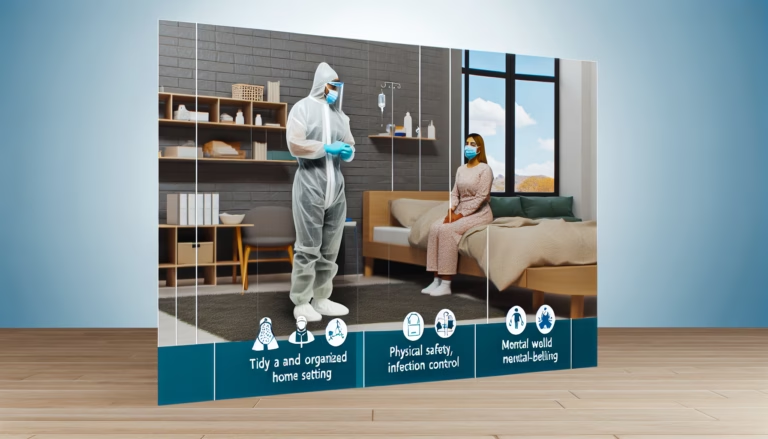
Home-Based Therapies as a Game-Changer for Chronic Disease Management
For many people living with chronic diseases, daily routines often revolve around managing their conditions. Thankfully, innovations in healthcare and a shifted focus towards home-based therapies are making chronic disease management more manageable and less disruptive.
Home-based therapies are a type of treatment that can be carried out within the comfort of one’s home. These might involve physical therapy exercises, medication regimes, mental health strategies or dietary adjustments. The aim is not only to manage symptoms, but also to curtail disease progression and improve overall quality of life.
Benefits of Home-Based Therapies
Switching to home-based care carries with it numerous benefits. Firstly, it provides patients with greater autonomy over their healthcare and promotes greater continuity of care. Regular involvement in the therapy planning and execution can empower patients to play a more active role in their health management.
Secondly, being in a home setting makes it more convenient for patients. It offsets the need to frequently travel to healthcare facilities, reducing the associated stress and fatigue, especially for those with mobility impairments.
Last but not least, home-based therapies foster a personal, tailored approach to treatment. Therapists can get to know the patient’s lifestyle, preferences, home environment and support network in a way that is not possible in a clinical setting. This allows them to fine-tune treatment plans for the individual’s unique needs.
Role of Technology in Home-Based Therapies
Technological advancements, particularly in telehealth, mobile apps, and wearable devices, are driving the shift towards home-based therapies. Telehealth services enable virtual consultations with healthcare providers, reducing the need for in-person visits. Mobile health apps can help track medication schedules, symptom changes and lifestyle modifications – essential components of chronic disease management.
Wearable devices that monitor vital signs and bio-markers provide real-time health data that both patients and caregivers can utilize for well-informed decision making. Incorporating technology into home-based management plans adds a layer of efficiency, accuracy and convenience that significantly improves patients’ quality of life.
Challenges and the Way Forward
Despite the benefits, home-based therapies come with challenges. Not everyone has access to the necessary technology or the internet for telehealth services. Digital literacy can also be a barrier for some, particularly for elderly patients.
However, with continued developments and attention to these barriers, we can expect home-based therapies to be an increasingly major part of chronic disease management in the future. They hold the promise of better patient experiences, improved health outcomes, and ultimately, a more human-centered approach to healthcare.
Living with a chronic disease does not mean compromising on quality of life. With home-based therapies, patients can take charge of their health while maintaining their lifestyle and comfort. From the convenience of their own homes, they have the power to transform their health journeys, one step at a time.