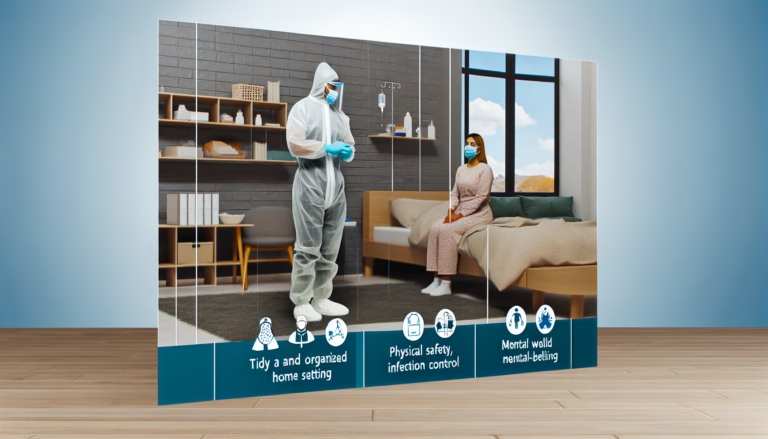
The Power of Mindfulness for Home Health Care
Understanding and effectively managing our health is an essential part of our daily lives, particularly when confronting the complex demands of home health care. Incorporating mindfulness practices into our routine can significantly enhance our ability to cope with and navigate this journey. So, what’s mindfulness, and how can it bolster home health patients, caregivers, and health lovers? Let’s dive in.
Understanding Mindfulness
Mindfulness is a form of meditation rooted in the idea of living fully in the present moment—without judgment and without being overly responsive or overwhelmed by what’s happening around. It’s not only a mind-body means to manage stress, but it’s also a potent tool for enhancing mental health and overall well-being.
Breathing Life into Your Health with Mindfulness
Mindfulness offers various health benefits. It can help reduce bleeding risks in patients on anticoagulation therapy, improve pain management, and lower blood pressure. Furthermore, studies have shown its effectiveness in tackling mental health issues like depression, anxiety, and post-traumatic stress disorder (PTSD).
A Tool for Caregivers
Caregivers are often subjected to high levels of stress. Integrating mindfulness into their routine can help them remain calm in the face of adversity, make more focused decisions, and prevent caregiver burnout. Furthermore, bottom line—it helps them be more present, compassionate, and supportive toward those under their care.
How to Incorporate Mindfulness into Your Routine
It’s simpler than you might think! For many, mindfulness starts with the art of focusing on their breath. This can be as straightforward as setting aside five minutes a day, sitting quietly, and observing your breath. Activities such as yoga and tai chi can also offer you a physical component to mindfulness.
Another highly enriching practice is mindful eating, where you focus on your food—its textures, flavors, smells, and even its origins. This enhances not only your appreciation of your meals but also helps in healthier eating and digestion.
Lastly, consider adopting a mindfulness app; many provide guided exercises suitable for newcomers or those seeking to deepen their practice. Some offer mood tracking tools and tailored programs that can support a range of healthcare needs.
In Conclusion
Mindfulness, with its emphasis on living in the present and developing an understanding connection with our physical and mental states, can be a powerful tool in optimizing how we manage home healthcare. It’s about recognizing that while we may not always have control over our circumstances, we can control our reaction to them, helping us navigate the health journey with resilience and grace.