Understanding Advanced Home Sensing Technologies for Health
With advancements in technology, the face of home health care is rapidly changing. Much credit can be attributed to the introduction of clever advancements like home sensing technologies. These useful tools, aimed at tracking and examining the health of patients in the comfort of their homes, overstep the confines of traditional caregiving and open up a world of possibilities, greater autonomy, safety and better disease management. In this article, we delve deeper into how advanced home sensing technologies are revolutionizing home health care for better.
The Emergence of Advanced Home Sensing Technologies
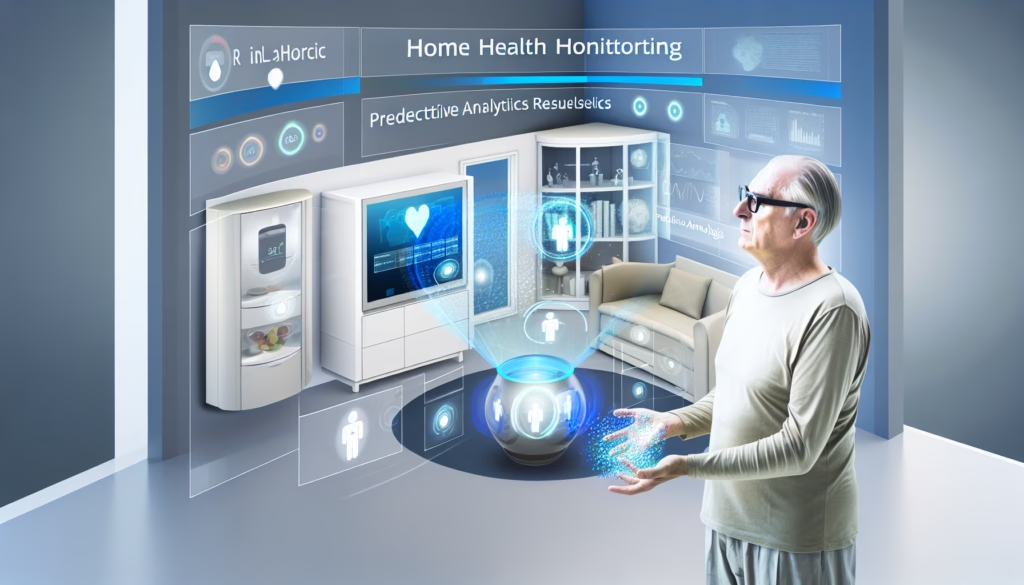
Sensing technologies, as the term implies, are systems that are designed to sense, monitor and detect the health conditions of individuals. Over the years, home sensing technology has expanded beyond conventional wearable devices, such as heart rate or blood pressure monitors. These innovative solutions now encapsulate in-home sensors, smart home technology, and even predictive analytics that, in effect, transform how individuals manage their health at home.
Different Types of Home Sensing Technologies
- In-Home Sensors: These sensors are typically installed in strategic locations in a patient’s home to monitor movement, behavior, and usage patterns. For instance, motion sensors can detect and send alerts for unusual activity, while bed sensors can provide valuable insights into sleep patterns and quality.
- Smart Home Technology: This booming sector includes devices like smart thermostats, security systems, and voice-activated equipment. These tools help improve home safety and enable voice control of various elements of a patient’s surroundings, enhancing their autonomy and making daily tasks easier.
- Predictive Analytics: This powerful software takes the data from these various home health technologies and analyzes it to predict potential health concerns or risks. It enables proactive intervention by alerting caregivers or healthcare professionals, which leads to timely detection and management of potential health issues.
Benefits of Home Sensing Technologies
Advanced home sensing technologies provide an array of benefits to patients, caregivers, and healthcare professionals alike:
- Improved Patient Autonomy: These technologies provide elderly or chronically ill patients with an improved sense of independence, giving them more influence over their health and the ability to comfortably live at home for longer.
- Informed Decision Making and Proactive Care: With the ability to track and predict health issues, patients and healthcare professionals can make well-informed decisions, enabling early intervention and reducing the risk of hospital admissions.
- Reduced Caregiver Stress: For caregivers, the real-time updates and alerts provide assurance about the patient’s health and well-being, reducing stress and enhancing the caregiver’s quality of life.
Conclusion
The use of advanced home sensing technologies marks a significant shift in the delivery of home health care. By harnessing the power of these technologies, older adults, people with chronic diseases, and their caregivers can experience improved health outcomes, autonomy, and quality of life. As healthcare continues to evolve, it is clear that these groundbreaking technologies are paving the way for a more empowered and efficient form of home health care.