Today, we’ll delve into a topic that’s gaining significant traction in home healthcare circles – telehealth. As a growing medium for delivering health services, telehealth has become a vital tool for many patients managing long-term care at home. Our focus will primarily lie on the benefits of telehealth and how it’s changing the landscape of home healthcare.
Understanding Telehealth
Telehealth is the use of digital information and communication technologies, like computers and mobile devices, to access healthcare services remotely and manage your health care. These might be services you’re used to getting in your doctor’s office. For instance, this could involve using a video conferencing app on your phone to partake in an appointment with your doctor or using a health monitoring app to track and share health data with your physician.
The Advantages of Telehealth for Home Health Patients
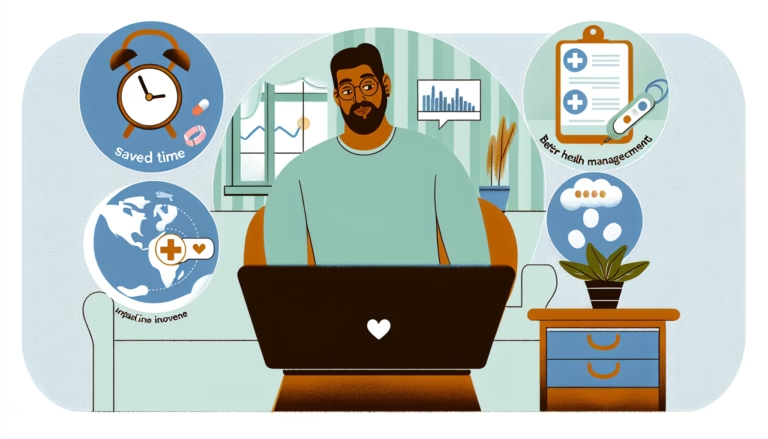
The most apparent benefit is instant access to healthcare, especially in an emergency. Telehealth reduces transportation time, making it especially useful for those living in remote communities without easy access to healthcare facilities. Also, it decreases the risk of catching new illnesses or spreading your own to other people. This has been particularly beneficial during the COVID-19 pandemic, with more people opting for telehealth consultations to minimize contact and risk.
More importantly, it allows prompt communication between patients and caregivers or health professionals. You can quickly get in touch with your doctor, discuss symptoms, share health data over secured lines and get immediate feedback, adding a level of convenience that’s transformative.
Technology Empowering Telehealth
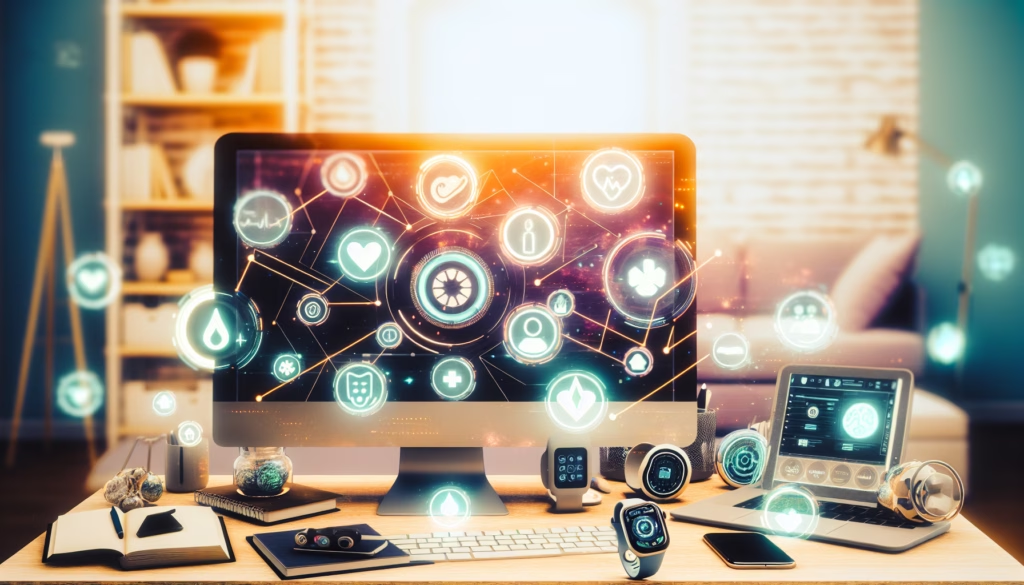
Advancements in technology are fueling this healthcare revolution. Sophisticated apps now allow home-based patients to monitor essential vitals like blood pressure, glucose levels, and heart rate, which can be shared with caregivers or health professionals digitally. Wearable devices (like smartwatches) establish 24-hour health monitoring, providing detailed analytics to alert doctors of any anomalies.
Moreover, Augmented Reality (AR) and Virtual Reality (VR) technologies can facilitate physiotherapy sessions or mental health therapies, delivering impactful results. Health records are now stored electronically (Electronic Health Records), and Artificial Intelligence algorithms can cross-verify patient information to prevent prescription errors.
Conclusion
As telehealth continues to evolve, it’s critical that patients, healthcare providers, and caregivers embrace these changes. The integration of telehealth into our daily routines can create a more proactive healthcare culture, potentially reducing hospital visits and enhancing overall health outcomes.
While the future of telehealth looks promising, it’s essential to remember that it doesn’t replace traditional medicine. Instead, it compliments it, offering an exciting avenue to make health a persistent dialogue rather than a periodic check-up.
Stay tuned with all4.health for more insights and advice on managing your health better!